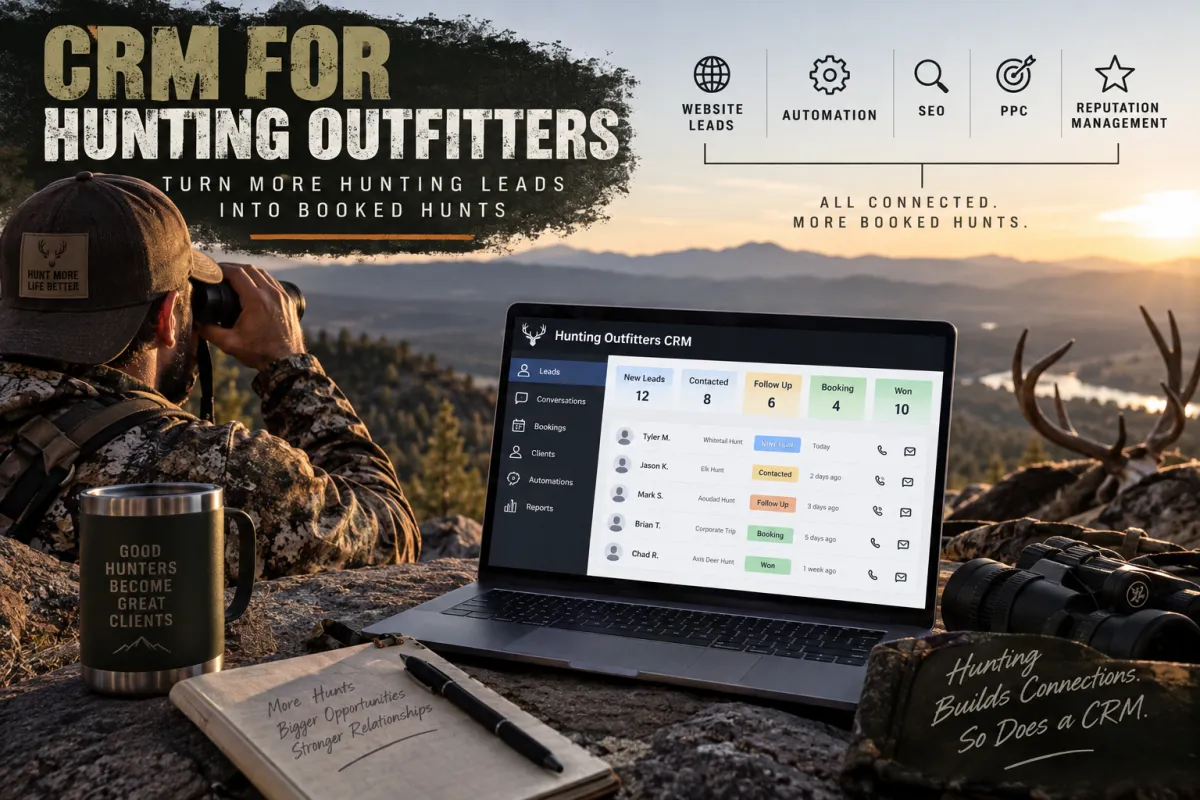
CRM for Hunting Outfitters: Turn More Hunting Leads Into Booked Hunts
A hunting outfitter has a lot to manage before a hunter ever steps into the field. New inquiries come in, prospects ask about pricing and availability, phone calls need to be returned, deposits need to be tracked, and hunters who are not ready to book today may still become valuable clients later.
As those conversations multiply, it becomes much easier for a promising lead to get buried in an inbox or simply forgotten.
That is where a CRM for hunting outfitters can become valuable.
CRM stands for Customer Relationship Management. In practical terms, it gives an outfitter a central place to organize prospective hunters, keep track of conversations, manage follow-up, and maintain relationships with previous clients.
The bigger opportunity, however, is connecting that CRM to the rest of the outfitter’s marketing. Rather than treating CRM as another standalone piece of software, it can serve as the system that connects lead generation, marketing, follow-up, and customer relationships.
What Is a CRM for Hunting Outfitters?
Think about a hunter who discovers your website while researching a trophy whitetail hunt. They submit an inquiry asking about dates, accommodations, pricing, and what is included.
Without an organized system, that message could land in an email inbox with dozens of other conversations. Someone then has to remember what the hunter wanted, whether they received a response, and when another follow-up should happen.
A CRM provides a place to organize that process.
You can track when the inquiry arrived, which hunt the prospect is interested in, previous conversations, whether someone has followed up, and what needs to happen next.
When an outfitter is selling big game hunts worth thousands of dollars, even a small number of qualified inquiries slipping through the cracks can represent meaningful lost revenue.
Lead Generation Websites Should Connect With Your CRM
A hunting outfitter’s website should accomplish more than displaying great photos from previous hunts. A lead generation website should also make it easy for interested hunters to take action.
A visitor might request available dates, ask for pricing, inquire about a particular species, schedule a conversation, or request additional information.
Once that happens, the lead needs somewhere to go.
Connecting the website to a CRM allows those inquiries to become part of an organized process instead of being scattered across contact forms, email accounts, text messages, spreadsheets, and handwritten notes.
The website creates the opportunity. The CRM gives you a way to manage it.
That relationship becomes even more important as an outfitter begins generating additional traffic from SEO, PPC advertising, social media, referrals, and other marketing channels. Generating more leads does not accomplish much if there is no reliable system for turning those leads into conversations and eventually booked hunts.
CRM and Automation Can Improve Outfitter Follow-Up
Many hunters will not book during their first conversation with an outfitter.
One prospect may be researching a hunt several months in advance. Another may be comparing different outfitters. A corporate group could need time to coordinate schedules, while a previous client may simply be waiting for the right opportunity to return.
When follow-up relies entirely on memory, some of those opportunities are inevitably easier to lose track of.
This is where CRM automation can support the sales process.
After a hunter submits an inquiry, for example, the system could immediately confirm that the request was received while notifying your team that a new lead requires attention. If that hunter does not book right away, future follow-up can be scheduled rather than left to chance.
The purpose is not to automate away the personal relationship.
Hunting is a relationship-driven business, and prospective clients often want a real conversation with the outfitter responsible for their experience. Automation should support those conversations by helping ensure that good opportunities are not forgotten.
SEO Can Generate Hunting Leads Your CRM Helps Organize
Search engine optimization can put an outfitter in front of hunters while they are actively researching their next trip.
Those prospects might be searching for trophy whitetail hunts, Axis deer hunts, aoudad hunts, guided hunting trips, corporate hunting retreats, or other hunting opportunities.
Getting found in Google is valuable, but traffic itself is not the end goal.
Once a hunter reaches your website, you need a process for capturing that opportunity and moving it forward.
When SEO and CRM work together, you can start looking beyond website visits and think about the complete customer journey:
Search → Website Visit → Inquiry → Follow-Up → Conversation → Booked Hunt
That provides a much more useful picture of marketing performance than simply measuring how many people reached the website.
PPC Advertising Works Better When Leads Have Somewhere to Go
Pay-per-click advertising gives hunting outfitters another way to reach hunters searching for specific opportunities.
This can be particularly valuable with high-value hunts, where one new booking may justify a meaningful marketing investment.
But paid advertising also raises the stakes for follow-up because you are spending money to create those opportunities.
If a hunter clicks an advertisement, submits an inquiry, and then receives inconsistent follow-up, part of that advertising investment is being wasted.
A CRM can create a repeatable process for managing those paid leads while also helping an outfitter understand which campaigns are producing genuine opportunities rather than clicks alone.
Instead of stopping at, “How many people clicked our ad?” you can begin asking more useful questions.
Which campaigns generated qualified hunting inquiries? Which hunts attracted the most interest? How many inquiries became conversations? How many of those conversations became bookings? Which campaigns ultimately produced revenue?
That is where the information collected through a CRM can become especially useful.
Reputation Management Can Continue After the Hunt
A successful hunt does not have to mark the end of the customer relationship.
Past clients can become valuable assets for an outfitter. A satisfied hunter might leave a positive Google review, recommend the outfitter to friends, return for another species, or book another trip in a future season.
A CRM can help keep those relationships organized after the hunt is complete.
For example, a finished hunt could trigger a post-hunt process that reminds your team to thank the client and request feedback about their experience.
That naturally connects CRM with reputation management.
Rather than remembering to ask for reviews only occasionally, outfitters can establish a consistent process for gathering feedback from real hunters. Over time, those reviews can strengthen the business’s online reputation and provide future prospects with additional confidence when deciding where to book.
A CRM Can Help Build a Valuable Outfitter Database
One of the less obvious advantages of a CRM is what happens after several seasons of using it.
Think about all the people who may interact with an outfitter over the years. Some booked hunts. Others requested pricing but never committed. Some wanted to hunt whitetail but may be interested in Axis or aoudad later. Others may have wanted to book but could not make the available dates work.
Previous clients may also be willing to return if they know another hunting opportunity is available.
Without an organized system, much of that information can disappear into old emails, phones, spreadsheets, and memory.
A CRM brings those individual relationships together into an organized database.
Over time, that database can be segmented according to hunting interests, previous trips, lead status, location, or other useful information. When a new opportunity becomes available, the outfitter may already have prospective hunters who have shown interest in something similar.
That can make the existing database a valuable business asset and reduce the need to constantly depend on brand-new leads.
CRM Gives Outfitters a Better View of the Entire Marketing System
The greatest value of CRM is not necessarily one particular feature. It is the visibility created when the different parts of your marketing begin working together.
Your lead generation website creates opportunities.
SEO helps hunters discover the outfitter organically.
PPC advertising puts particular hunting opportunities in front of people actively searching for them.
CRM and automation organize inquiries and support consistent follow-up.
Reputation management helps successful hunts lead to reviews, referrals, and greater trust.
These marketing activities do not have to function as isolated pieces. They become more useful when each one supports the next stage of the customer journey.
Do Hunting Outfitters Really Need a CRM?
Not every hunting outfitter needs a complicated sales system.
An outfitter handling only a small number of inquiries each year may be able to manage every conversation perfectly well with a basic process.
The need for a CRM becomes more apparent as lead volume grows and it becomes harder to manage prospects through memory, individual text messages, email inboxes, and spreadsheets.
So the more useful question is not whether your outfitting business needs another piece of software.
It is whether qualified hunters are slipping through the cracks.
If inquiries are coming in but follow-up is occasionally forgotten, previous conversations are difficult to track, or it is unclear which marketing efforts are actually producing bookings, a CRM may be worth considering.
The right system should simplify the business rather than add unnecessary complexity.
Building a Better System for Booking More Big Game Hunters
Ultimately, a CRM for hunting outfitters is about creating a better system for managing relationships.
The software itself is secondary.
What matters is having a process that helps capture new opportunities, respond quickly, follow up consistently, understand where prospective hunters came from, and maintain relationships after their hunts are complete.
For outfitters looking to book more big game hunters, CRM can become the connection between marketing activity and actual revenue.
At Click Supreme, we believe these systems should work together. Your website, CRM, automation, SEO, PPC advertising, and reputation management should all support the same objective: creating opportunities for your outfitting business and turning more of those opportunities into booked hunts.
Want to see where your current marketing and follow-up process may be leaving opportunities on the table?
Take the Click Supreme Hunting Outfitter Assessment and get a clearer look at the systems behind your growth.
