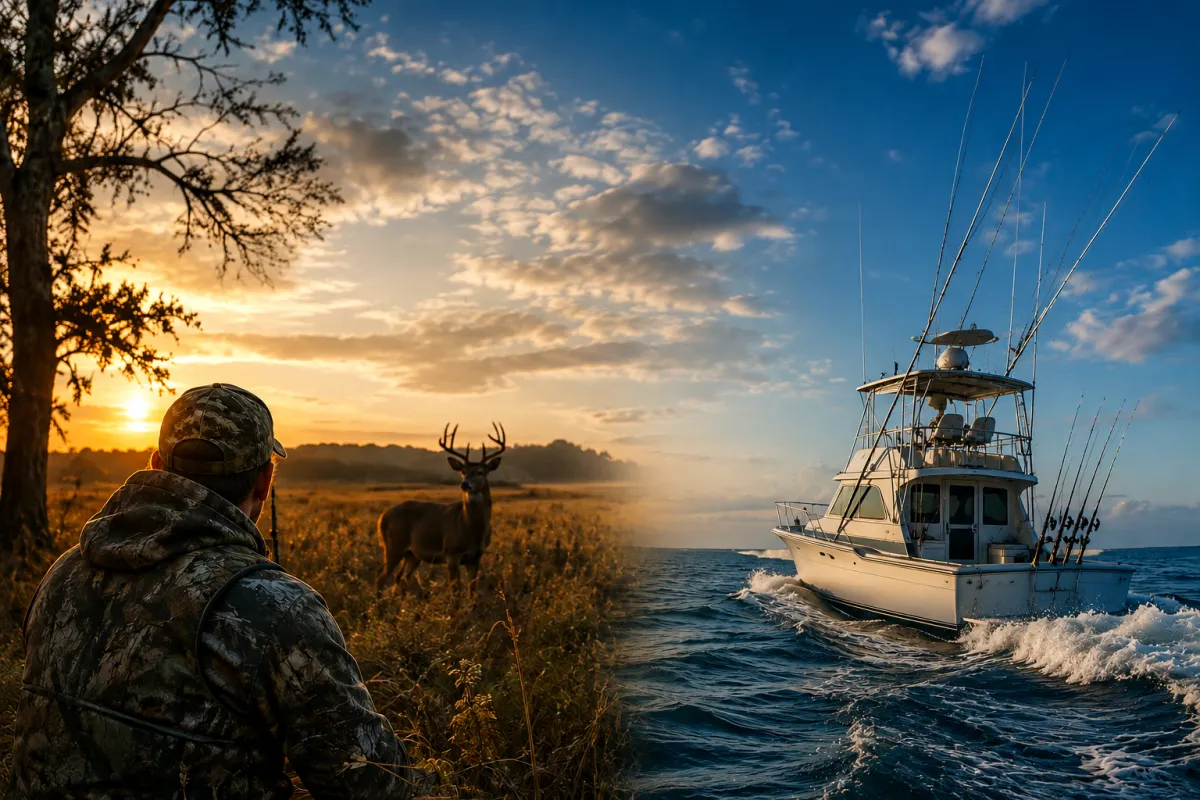
Marketing Outdoors: How Hunting Outfitters and Fishing Charters Can Generate More Bookings
Marketing an outdoor business is different from marketing many traditional service businesses.
Hunting outfitters and fishing charter operators aren't simply trying to generate website traffic. They're trying to connect with people actively looking for their next hunt, fishing trip, or outdoor experience — and turn that interest into actual bookings.
That's what makes marketing outdoors such an interesting opportunity.
The customers are already searching.
The challenge is making sure they find your business, understand why they should choose you, and have an easy path from discovering your company to starting a conversation.
For outdoor businesses, that usually comes down to three things:
Getting found for the searches that matter
Turning website visitors into qualified leads
Following up with those leads consistently
When those pieces work together, marketing becomes less about generating random traffic and more about creating a system designed to produce bookings.
Outdoor Marketing Starts With Search Intent
One of the biggest mistakes a business can make with digital marketing is starting with what they want to promote rather than what their customers are already searching for.
A hunting outfitter may want to promote a particular ranch, species, package, or season.
A fishing charter may want to promote offshore trips, bay fishing, specific species, or a particular location.
But the first question should be:
What is the customer actually typing into Google?
That's where keyword research becomes valuable.
Instead of guessing what potential customers want, search data can help identify the services, experiences, and locations they're already looking for.
And in the outdoor industry, those searches can become very specific.
What This Looks Like for a Texas Hunting Outfitter
Consider an outfitter offering axis deer hunts in Texas.
Someone planning that trip may search Google for:
Texas axis deer hunts
Current keyword research shows approximately 480 monthly searches for that phrase.

That's important because those searches represent something much more valuable than general website traffic.
They represent intent.
Someone searching for Texas axis deer hunts isn't casually researching the outdoor industry. There's a reasonable chance they're considering an actual hunt.
The opportunity for the outfitter is to create a strong presence around searches like these.
That could include a dedicated service page explaining the hunt, location, accommodations, pricing structure, availability, what hunters can expect, and how to inquire about an upcoming trip.
The goal isn't simply to rank for a keyword.
The goal is to get the right offer in front of the right person when they're actively searching for it.
Fishing Charters Have the Same Opportunity
The exact same principle applies to fishing charters.
Consider:
Fishing Charters in Corpus Christi
Current keyword research shows approximately 1,900 monthly searches for that phrase.

That's a significant pool of potential customers actively looking for the service.
A Corpus Christi fishing charter doesn't necessarily need more website visitors.
It needs more of the right visitors — people looking to book a fishing trip in Corpus Christi.
This is where location and service-specific keyword research becomes especially valuable.
Instead of building a website around broad terms such as "fishing trips," a charter business can identify the searches that better reflect booking intent and build its content around those opportunities.
The same strategy can apply to different locations, types of trips, and species.
The search itself tells us something about what the customer wants.
Good outdoor marketing builds from there.
Getting Found Is Only the First Step
Ranking for valuable searches can create opportunity, but traffic alone doesn't produce revenue.
Once someone reaches the website, the next question becomes:
What happens next?
A potential hunter might be comparing several outfitters.
A family planning a vacation might have multiple fishing charters open in different browser tabs.
They're evaluating websites, photos, reviews, available trips, credibility, and how easy it is to get more information.
That means the website has another job beyond getting found.
It needs to turn interest into action.
For an outdoor business, that might mean encouraging someone to:
Request information
Ask about availability
Inquire about a particular hunt or trip
Submit their contact information
Start a conversation about booking
This is where SEO and lead generation should work together.
Search visibility gets the prospect to the website. The website gives them a reason to raise their hand.
What Happens After the Lead Comes In?
This is where another major marketing opportunity appears.
Outdoor experiences aren't always impulse purchases.
Someone considering a guided hunt may be planning months ahead. A fishing charter customer may be coordinating travel, friends, family, lodging, or vacation dates.
Not every prospect is going to book immediately after submitting an inquiry.
That doesn't necessarily mean they're a bad lead.
It means there needs to be a process for staying connected.
A strong follow-up system can help an outdoor business respond quickly, organize inquiries, answer common questions, and continue the conversation with prospects who aren't ready to book today.
Instead of relying on memory, scattered emails, or a spreadsheet, the business can build a repeatable process for moving interested prospects toward a decision.
That's where marketing starts becoming a system rather than a collection of disconnected tactics.
The Three Pieces of an Outdoor Marketing System
For many hunting outfitters and fishing charters, the biggest growth opportunities can be grouped into three areas.
1. Visibility
Can potential customers find the business when they're searching for the hunts, fishing trips, species, and locations it offers?
This starts with understanding search demand and identifying the keywords most closely connected to the services being sold.
2. Lead Generation
Once those potential customers reach the website, is there a clear reason and an easy way for them to inquire?
Strong service pages, clear messaging, trust signals, and focused calls to action can help turn search traffic into actual sales opportunities.
3. Follow-Up
Once an inquiry comes in, what happens?
A consistent system for organizing and nurturing leads can help prevent good opportunities from getting forgotten or going cold.
These three pieces reinforce each other.
Visibility creates traffic.
The website turns traffic into leads.
Follow-up helps turn leads into bookings.
More Traffic Isn't Always the Answer
This is why the answer to generating more bookings isn't automatically "get more traffic."
A hunting outfitter could already have people finding the website but struggle to convert those visitors into inquiries.
A fishing charter could generate plenty of leads but lose opportunities because follow-up is inconsistent.
Another business may have a great website and strong sales process but simply isn't visible for the searches its customers are making.
The growth opportunity is different for every business.
Before investing more money into marketing, it helps to identify where the system is actually breaking down.
Find the Growth Opportunities in Your Outdoor Business
You may not need to rebuild your entire marketing strategy.
There may simply be one or two areas preventing your business from generating more opportunities from the people already searching for the experiences you offer.
That's why we've created separate growth assessments for hunting outfitters and fishing charter businesses.
Each assessment is designed to help identify potential gaps across visibility, lead generation, and follow-up — and give us a better understanding of where opportunities may exist in your business.
Hunting Outfitters
If you operate a hunting outfitter, take the Outfitter Growth Assessment to take a closer look at your current online visibility, lead generation, and follow-up process.
Take the Outfitter Growth Assessment
Fishing Charters
If you operate a fishing charter, take the Fishing Charter Assessment to take a closer look at how your business is attracting, capturing, and following up with potential customers.
Take the Fishing Charter Assessment
The goal isn't more marketing for the sake of marketing.
It's creating a better path from being found to getting booked.
